Purpose
Build a safe setup before the car moves. Good setup = better control, less fatigue.
Preparing to drive — 10 steps
1) Documents & L-plates
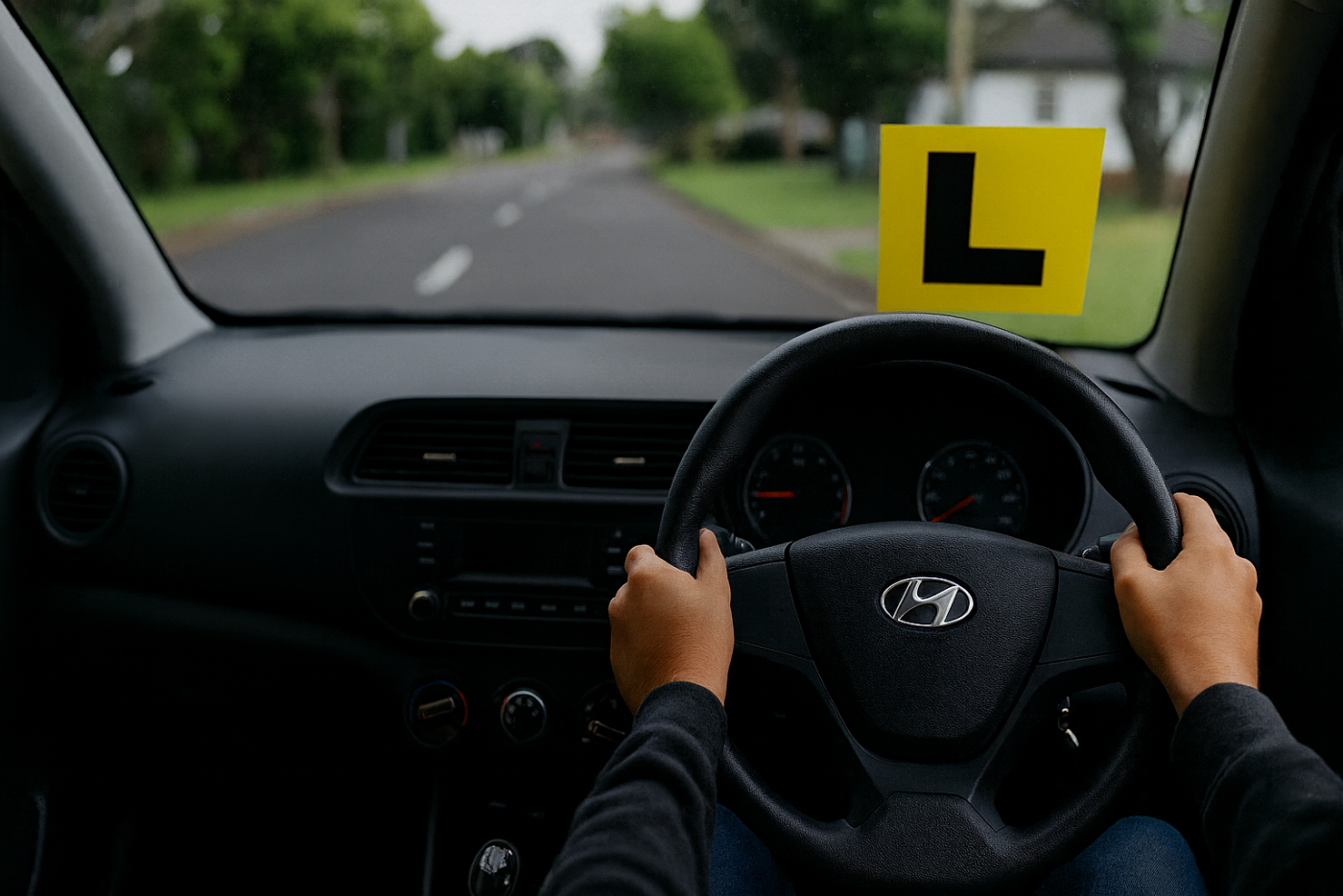
Learner licence with you. L signs clear front & back. Car roadworthy.
2) Seat position (see the road clearly)
Slide seat so you can press pedals fully without stretching. Hips back in the seat.
3) Seat height & backrest
Raise seat if needed. Backrest fairly upright to support your back and shoulders.
4) Steering wheel position
Wheel should face your chest (not chin). Elbows slightly bent. Thumbs rest on the rim.
5) Head restraint
Top of the headrest near top of your head. Closer to the back of your head = safer.
6) Seatbelt on correctly
Low and firm across the hips, no twists. Shoulder strap across chest, not neck.
7) Mirrors set (rear + sides)
- Rear mirror: see straight through back window.
- Side mirrors: see a thin slice of your car + the next lane.
Even with perfect mirrors, you still have blind spots.
8) Know your blind spots (do head checks)
Before moving off or changing lanes, turn your head to check the blind spot.
9) Foot placement & brace
Right foot controls accelerator/brake. Left foot rests on the footrest to brace your body.
10) Controls check (10-second scan)
Indicators, wipers, lights, horn. Dashboard warning lights off. Handbrake set.
11) Move-off routine
Mirrors → signal → head check → select gear → release handbrake → move smoothly.
12) Warm-up practice (2 minutes)
In a quiet street: do one move-off, one kerbside stop, and a gentle straight-line brake. Feel the pedal pressure.
Tip: A good driving position lowers fatigue and helps you steer smoothly and stop in time.