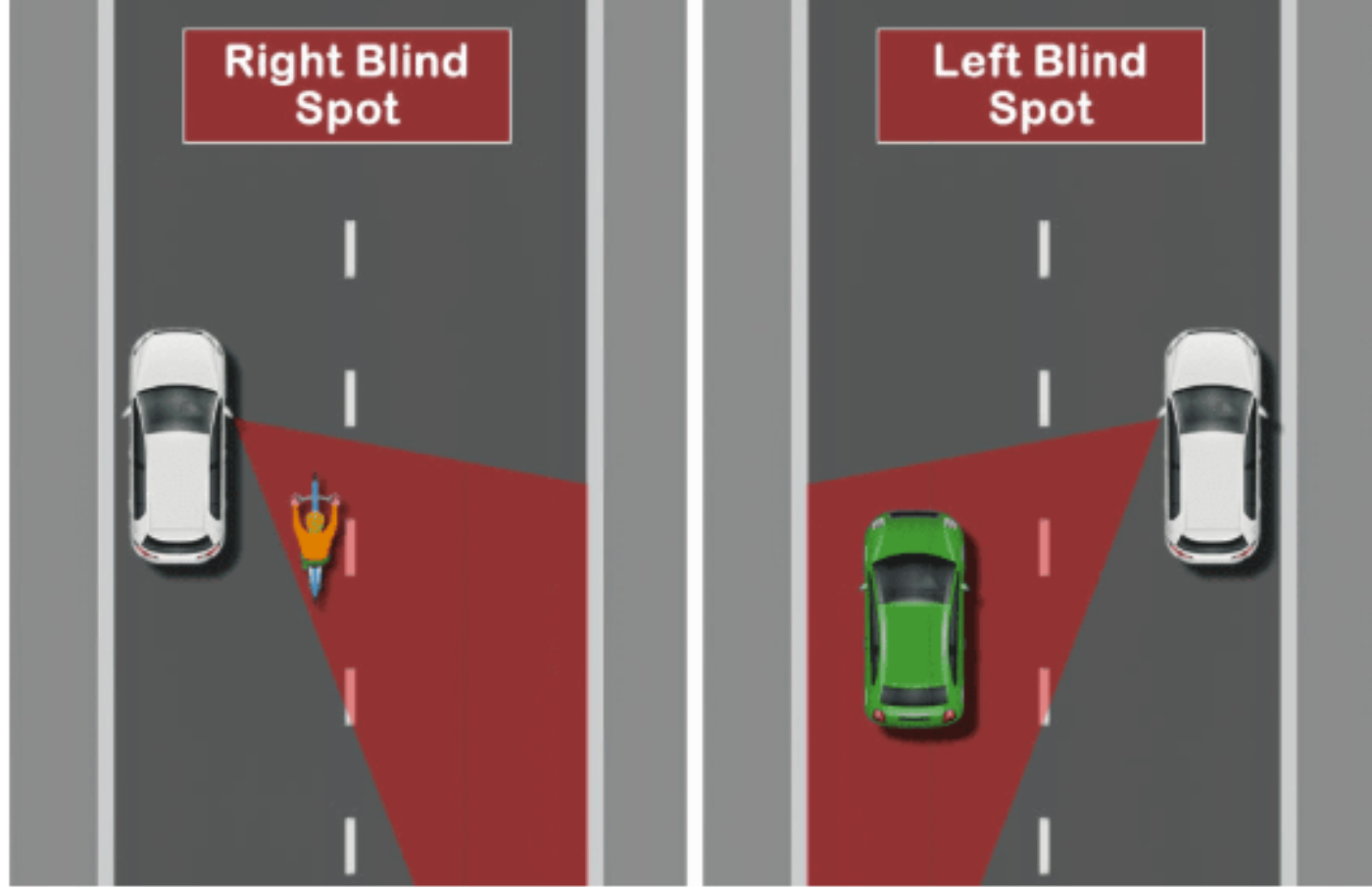
What is a blind spot?
It’s the area your mirrors can’t see. Even with perfect mirror settings, you must turn your head to check before you move.
Blind Spots — 10 Simple Rules
1) Set mirrors to reduce, not remove
Rear mirror shows the back window. Side mirrors show a thin slice of your car plus the next lane.
2) Head check before moving off
Mirrors → signal → right head check → move smoothly from the kerb.
3) Lane change routine
Mirrors → signal → head check into the lane → gentle steer across → cancel signal.
4) Merging from a ramp
Build speed on the ramp, pick a gap, head check over the right shoulder, then merge.
5) Overtaking parked cars
Mirrors → signal right → head check right, move out; after passing: mirrors → signal left → head check left, move back.
6) Leaving a roundabout
Before you exit, head check left for bikes/scooters in the left lane or shoulder.
7) Turning across a bicycle lane
Mirrors → signal → head check left for bikes, then turn slowly.
8) Reversing
Look all around: mirrors + over both shoulders. Reverse slowly and stop if you lose sight.
9) Watch for small road users
Motorbikes, scooters and cyclists hide in blind spots—double-check at night and in rain.
10) Stay out of others’ blind spots
Don’t sit beside trucks or cars’ rear quarters. If you can’t see their mirrors, they can’t see you—pass or drop back.
2-minute practice drill
- From the kerb: do move-off → lane change right → lane change left → kerbside stop.
- Say the rhythm out loud: “mirror – signal – head check – move.”
Tip: Most test fails for lane changes are simply no head check. Make it a habit every time.